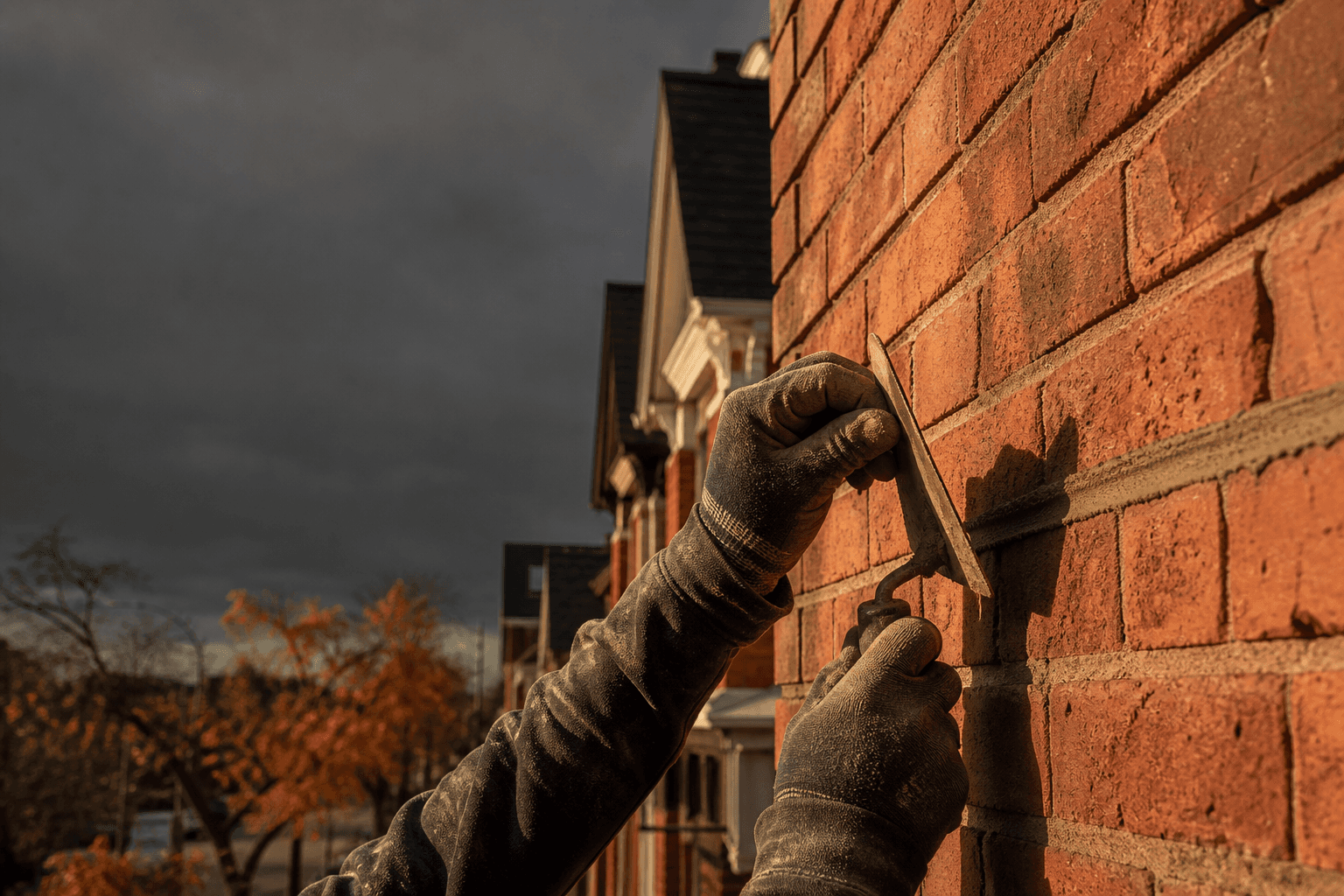
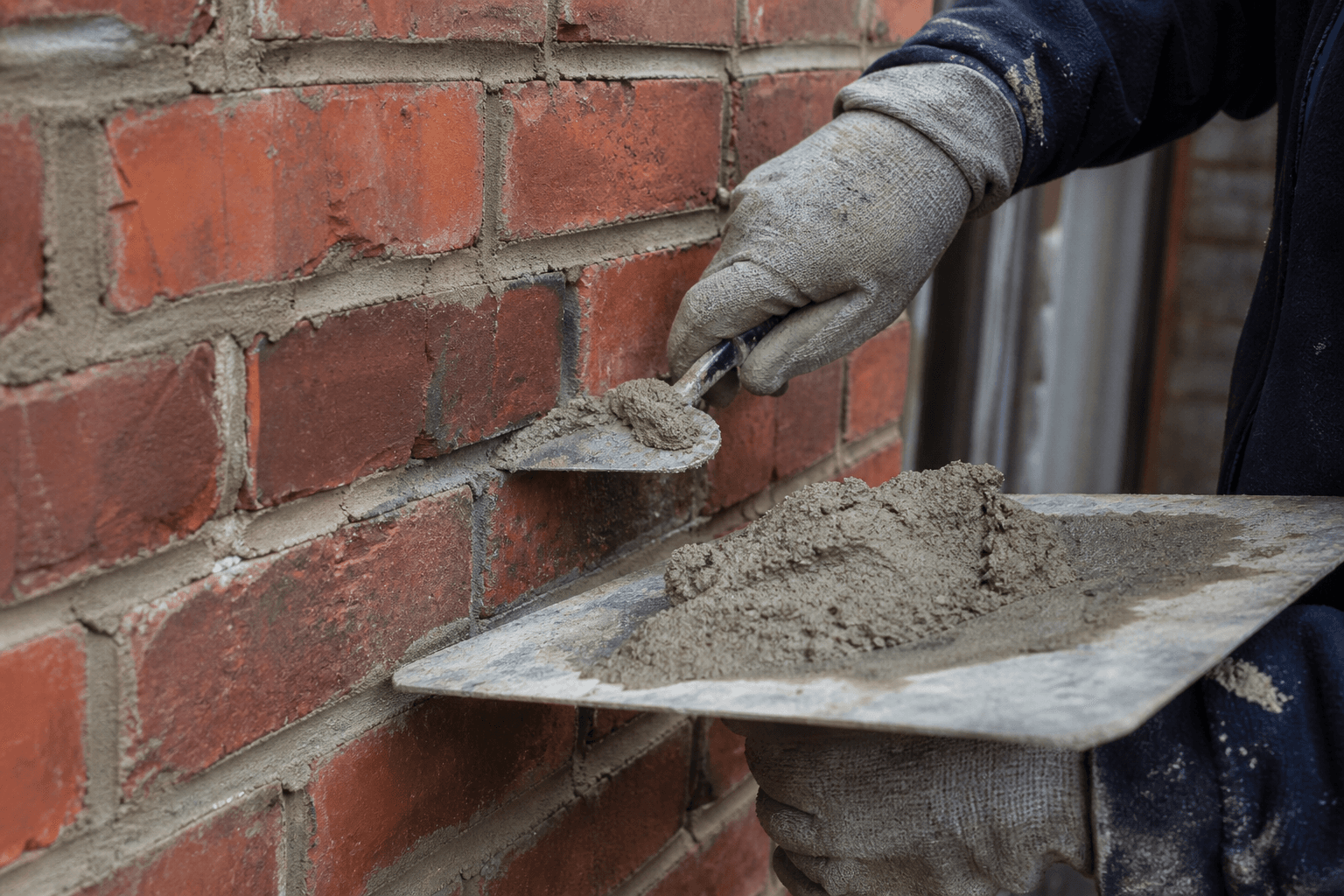
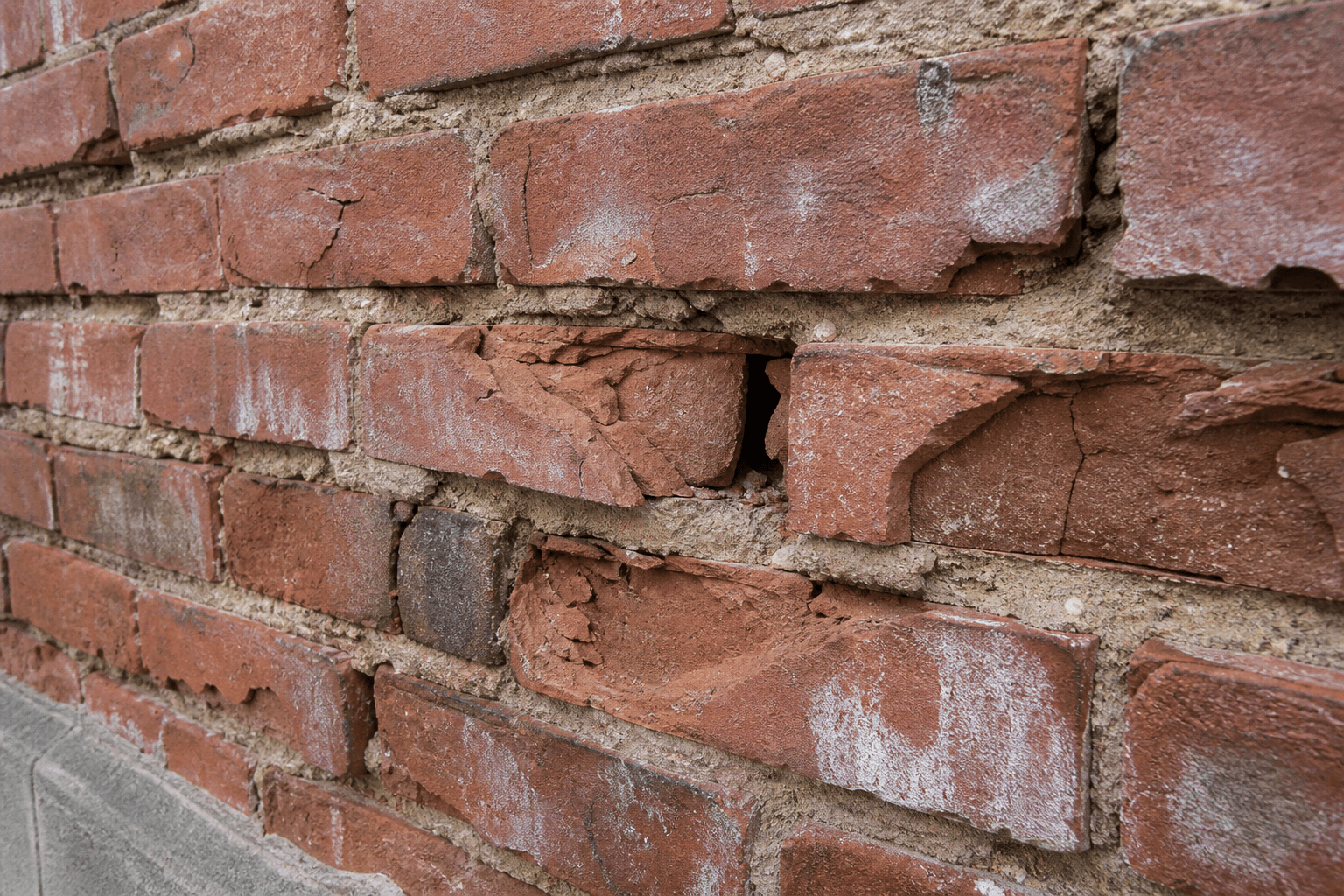
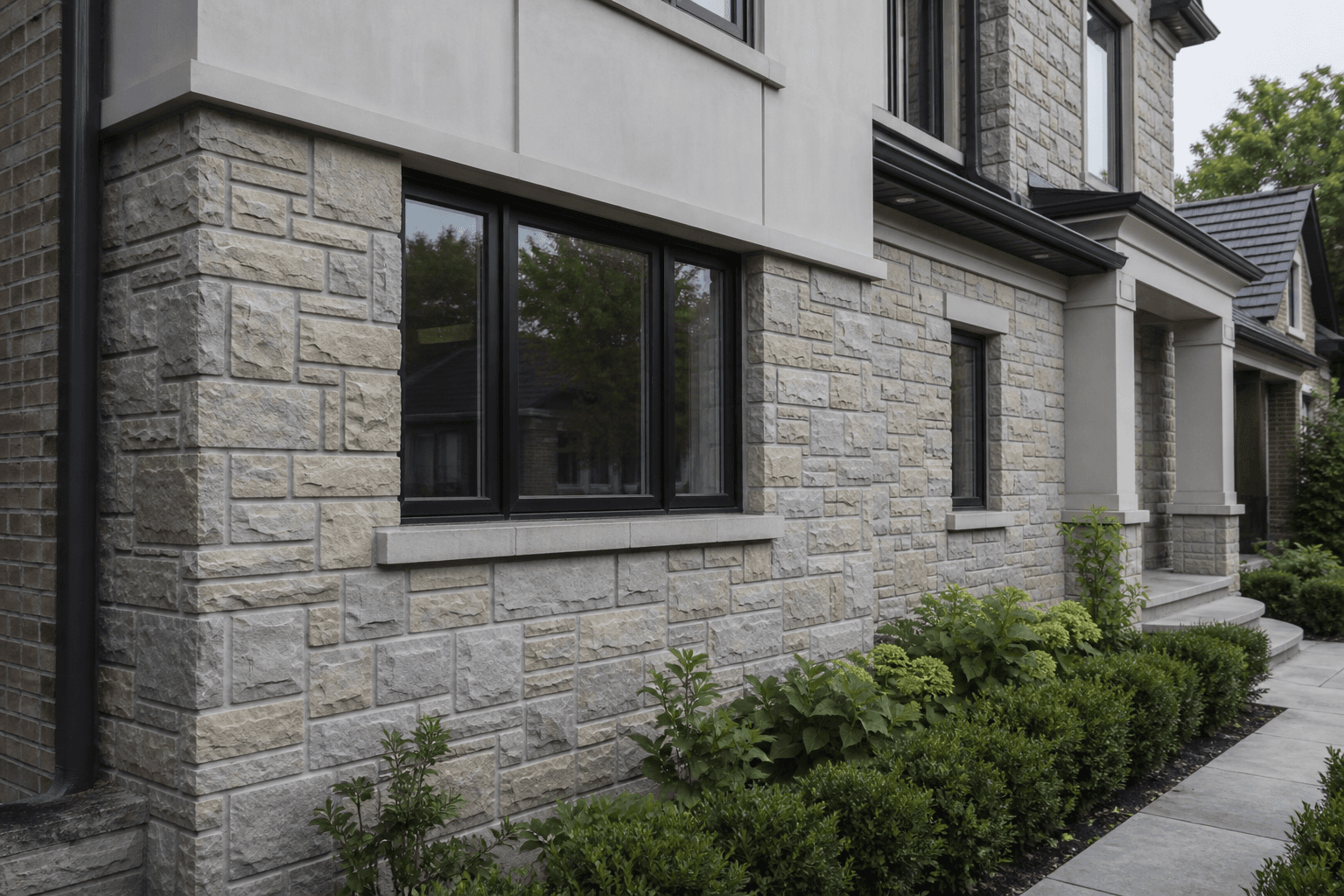
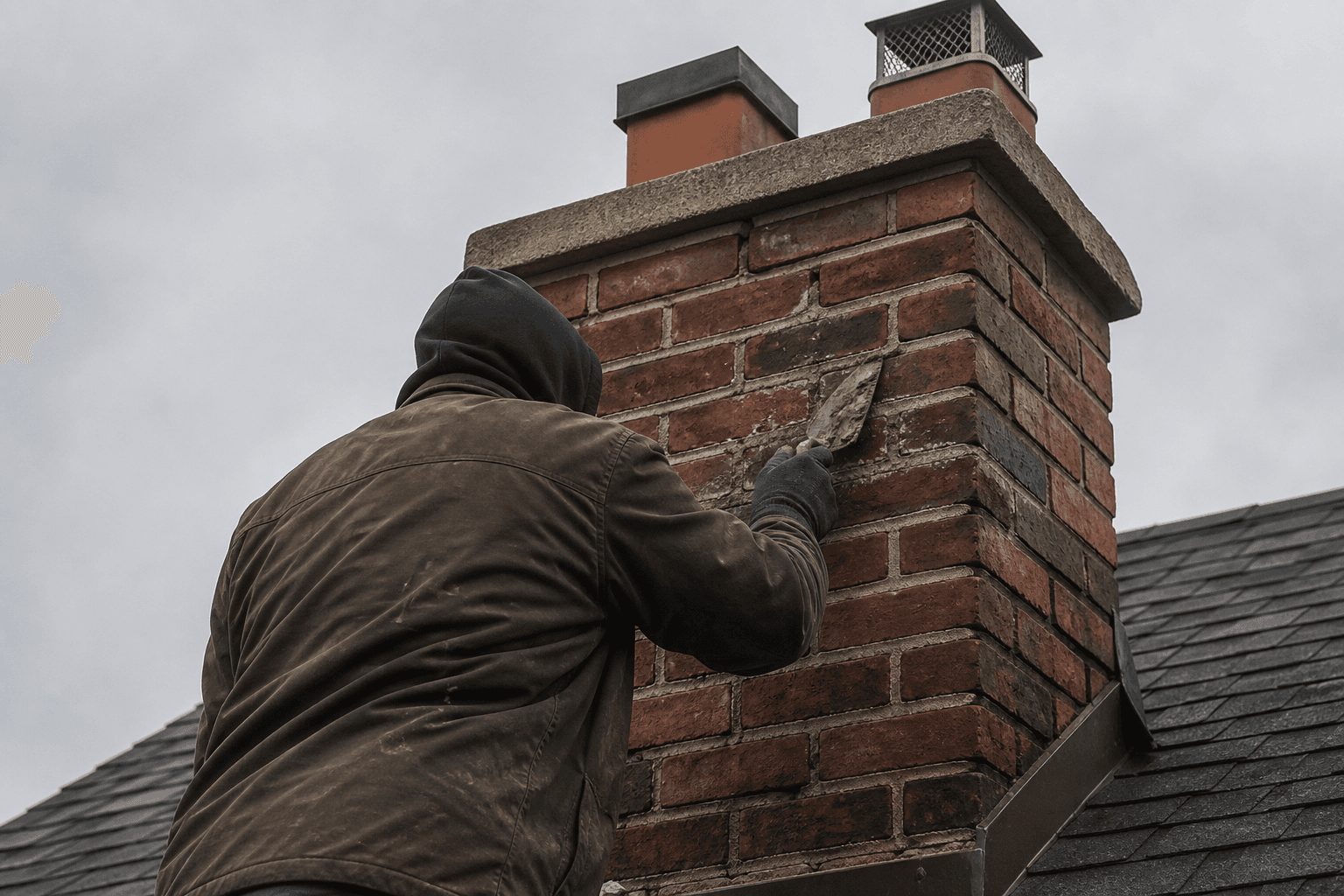
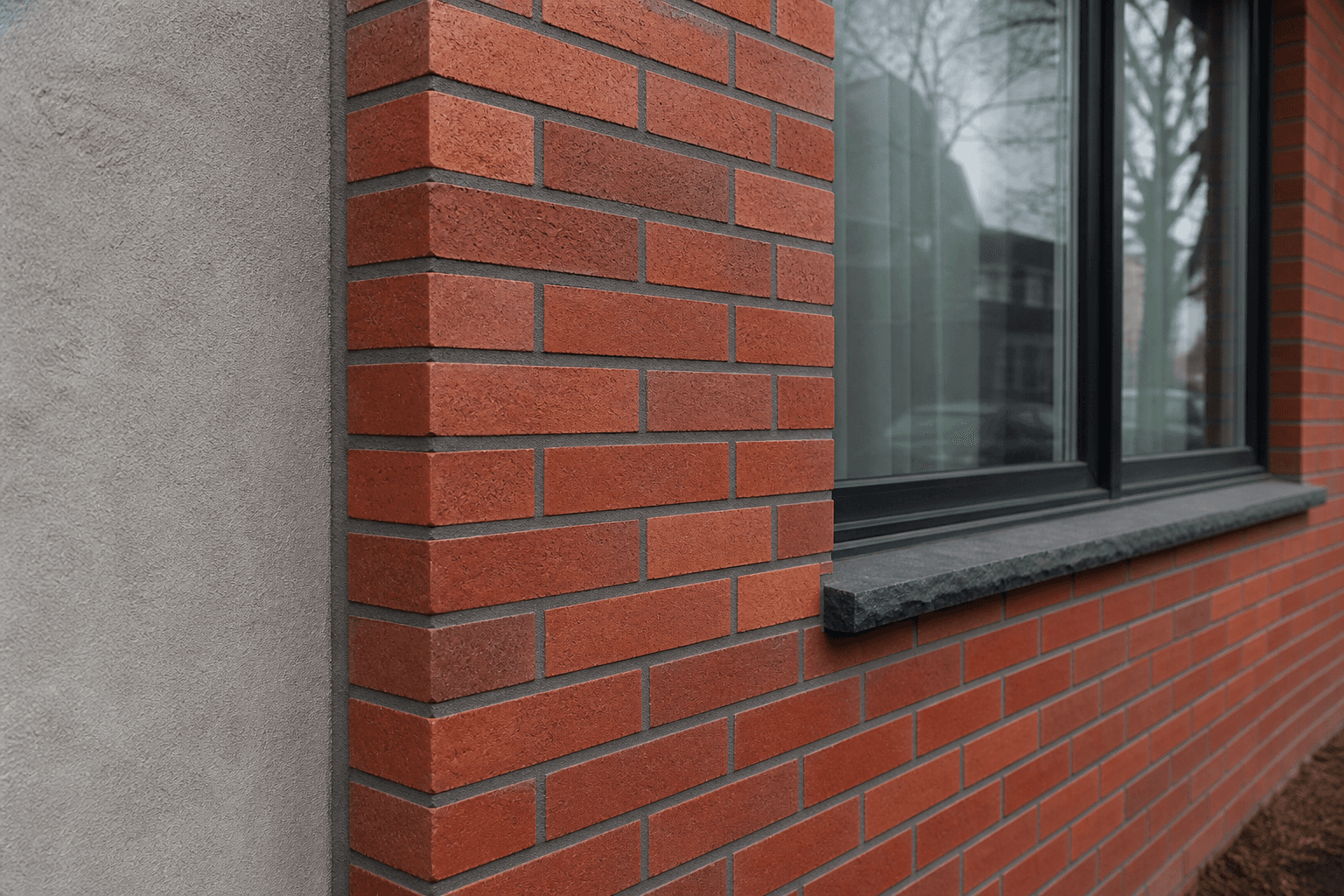
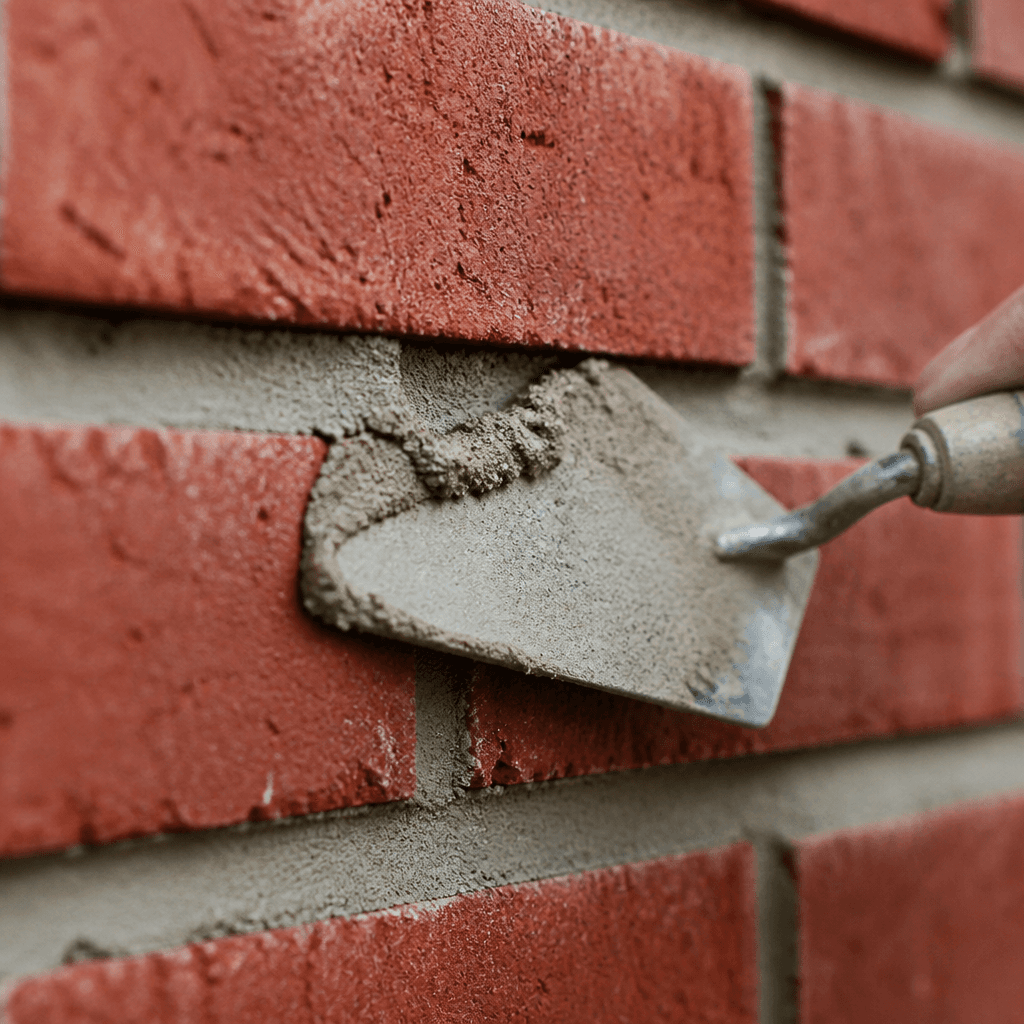
Masonry contractor in Toronto performing brick repointing on a heritage brick home

Toronto Masonry Contractor

Expert Masonry Toronto Trusts. Your Local Brick, Stone & Concrete Masonry Contractor.

From brick repointing on century-old Toronto homes to new stone masonry and retaining walls across the GTA, our licensed crew delivers results that last through Toronto winters. Call for a free estimate.

20+Years Experience
500+Projects Completed
100%Licensed & Insured
FreeEstimates

What We Do

Brick & Stone Masonry Services in Toronto & the GTA

From precision brick repointing on century-old Toronto homes to large-scale commercial masonry restoration, our crew brings the right skills and the right materials to every job.

Brick Repointing & Tuckpointing in Toronto

Brick Repointing & Tuckpointing

Expert mortar joint repair and tuckpointing to restore the structural integrity and weatherproof seal of your brick masonry.

Learn more →
Brick Repair & Restoration in Toronto

Brick Repair & Restoration

From spalled bricks and efflorescence to full-section replacement, we restore brick walls, facades, and structures to original condition.

Learn more →
Stone Masonry & Installation in Toronto

Stone Masonry & Installation

Custom natural stone installation for steps, veneers, garden walls, and architectural features — crafted by skilled stone masons.

Learn more →
Chimney Repair & Rebuilding in Toronto

Chimney Repair & Rebuilding

Tuckpointing, crown repair, flashing, full chimney rebuild — keeping your chimney watertight, structurally sound, and safe for use.

Learn more →
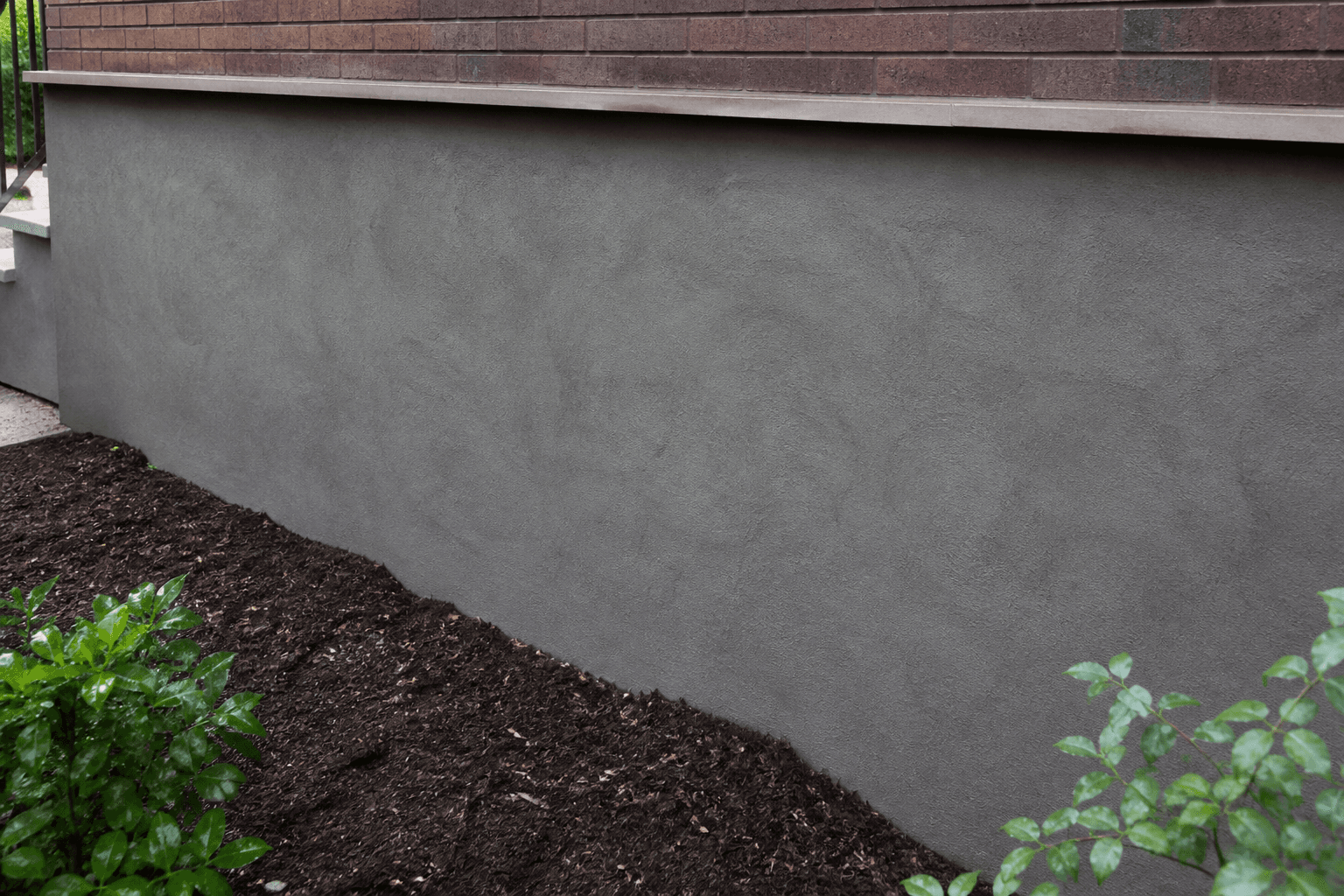
Parging & Foundation Coating in Toronto

Parging & Foundation Coating

Parging repairs crack-prone foundation walls and exposed concrete blocks, providing a weather-resistant protective coating.

Learn more →
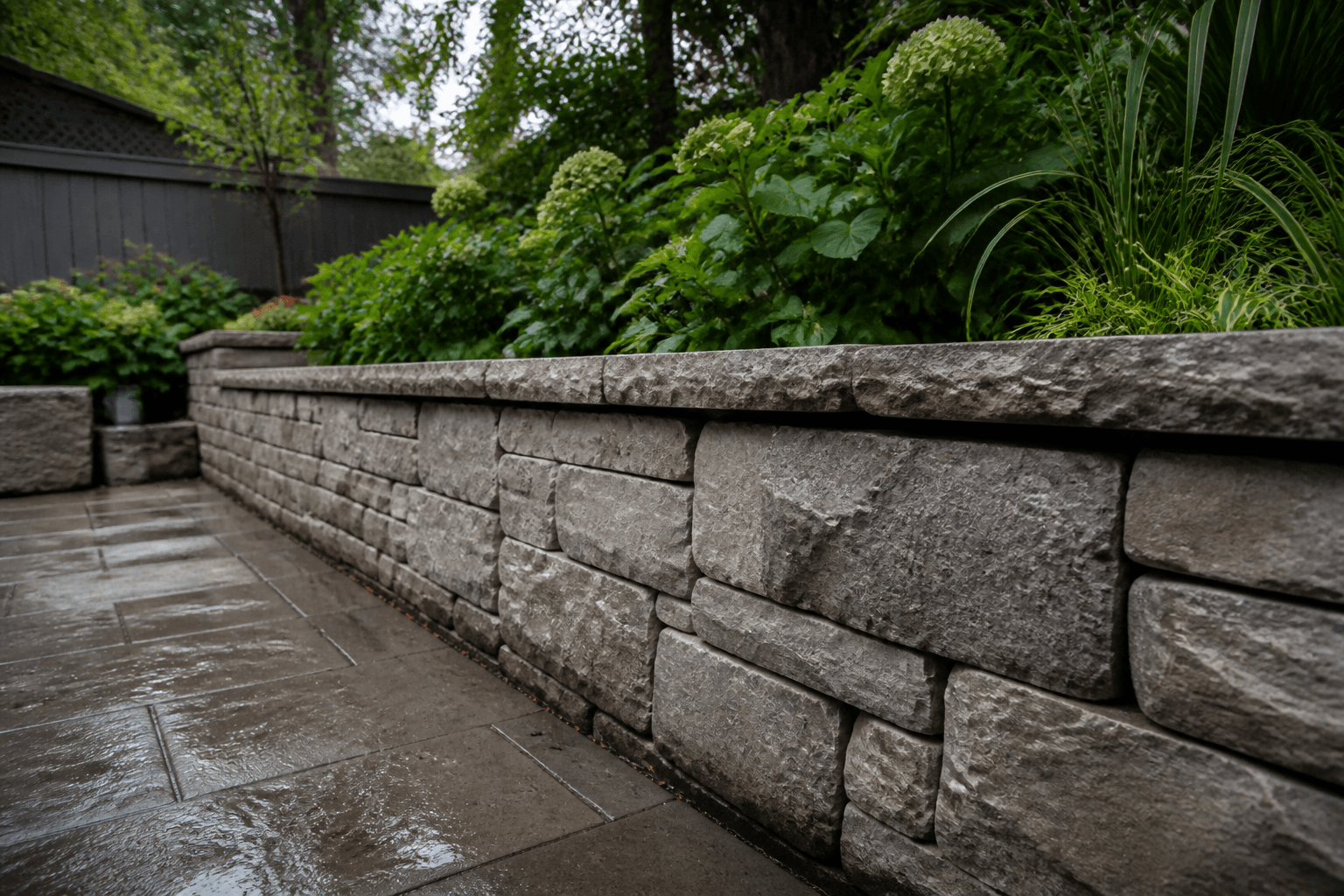
Retaining Wall Construction in Toronto

Retaining Wall Construction

Engineered brick, block, and natural stone retaining walls built to hold grade, prevent erosion, and enhance your property.

Learn more →
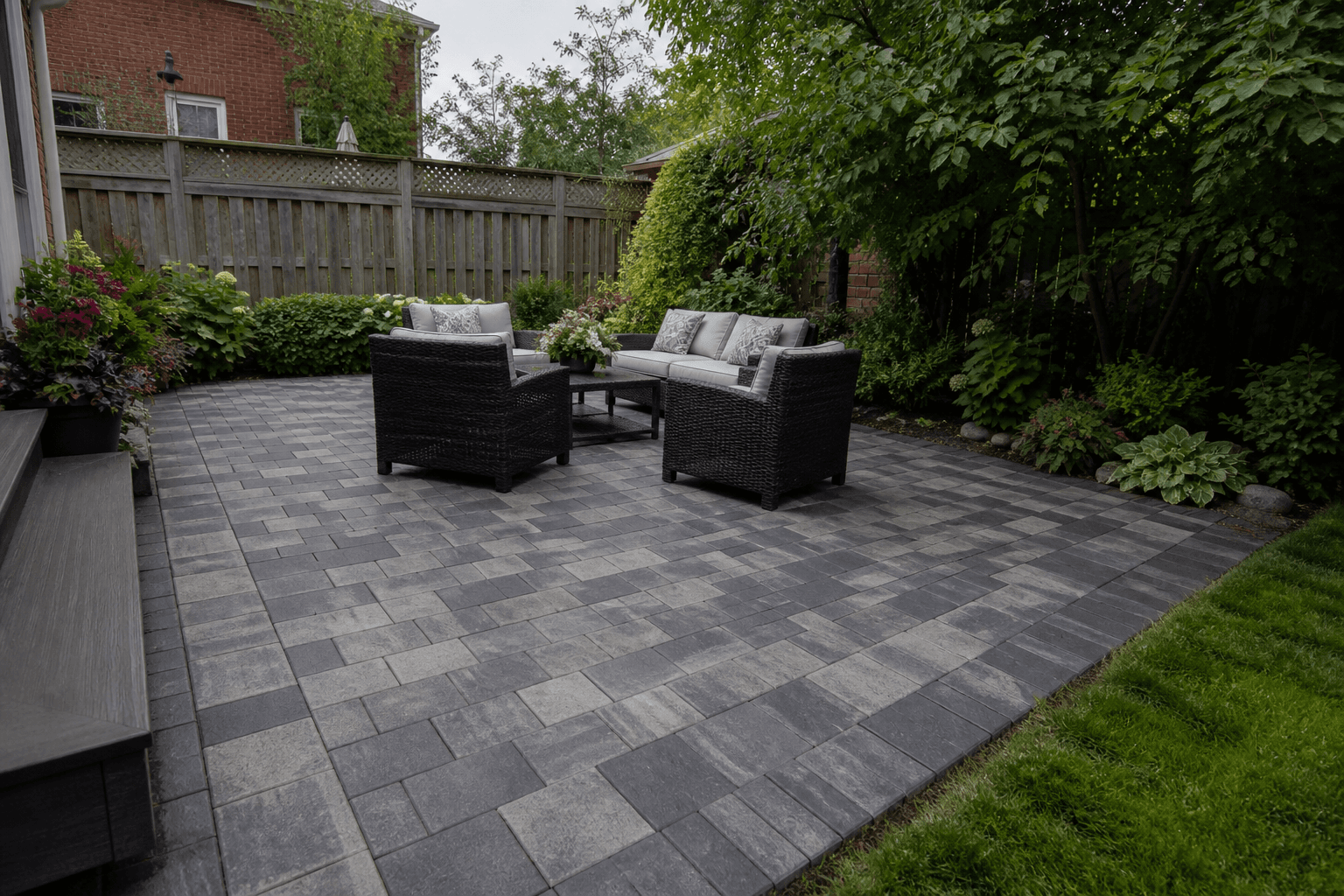
Interlocking Stone & Patios in Toronto

Interlocking Stone & Patios

Tumbled stone and concrete paver installation for driveways, patios, walkways, and pool decks — fully custom layouts and patterns.

Learn more →
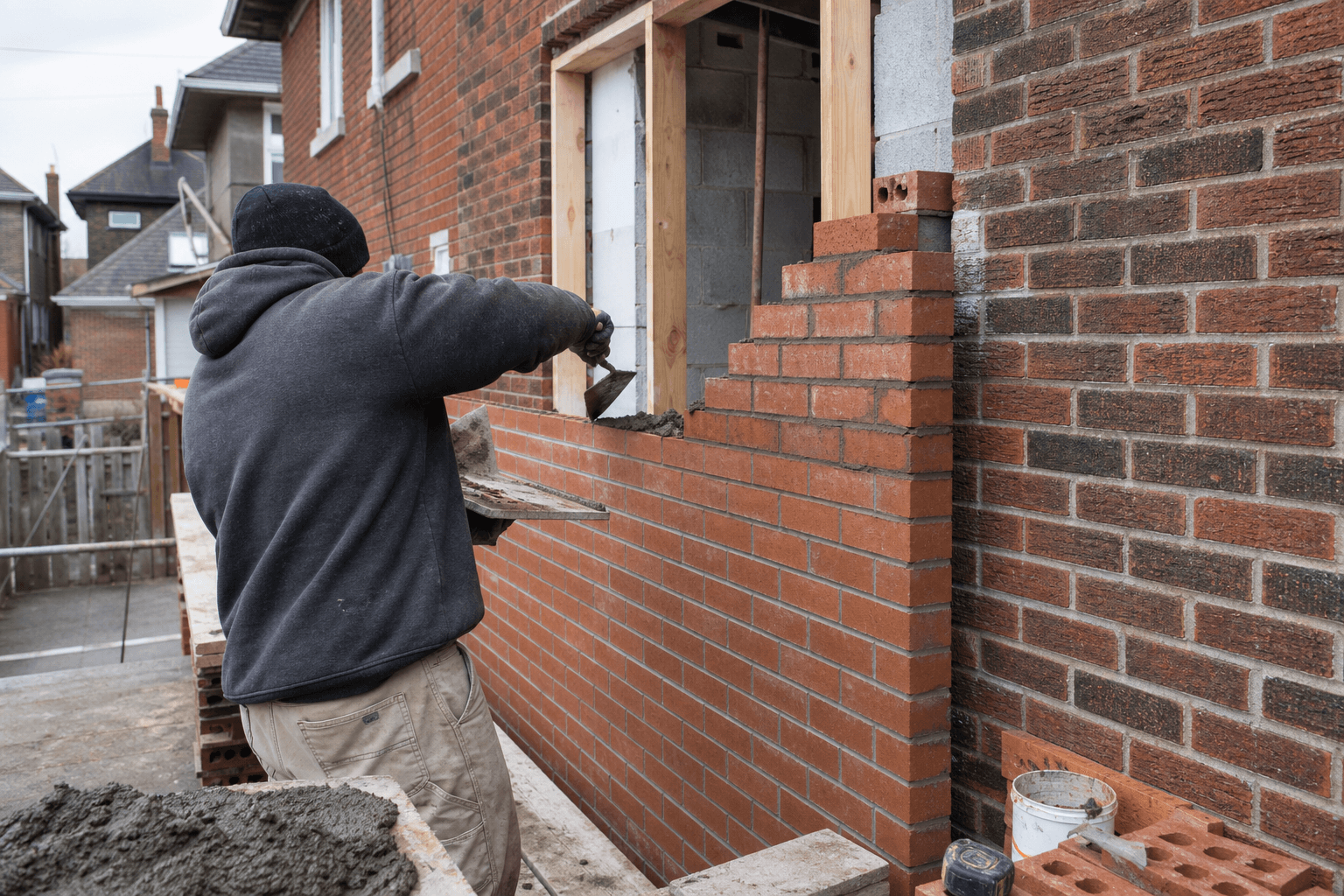
New Brick Construction & Extensions in Toronto

New Brick Construction & Extensions

Full brick laying for new home builds, additions, extensions, and garden walls — built to Ontario Building Code with precision and care.

Learn more →
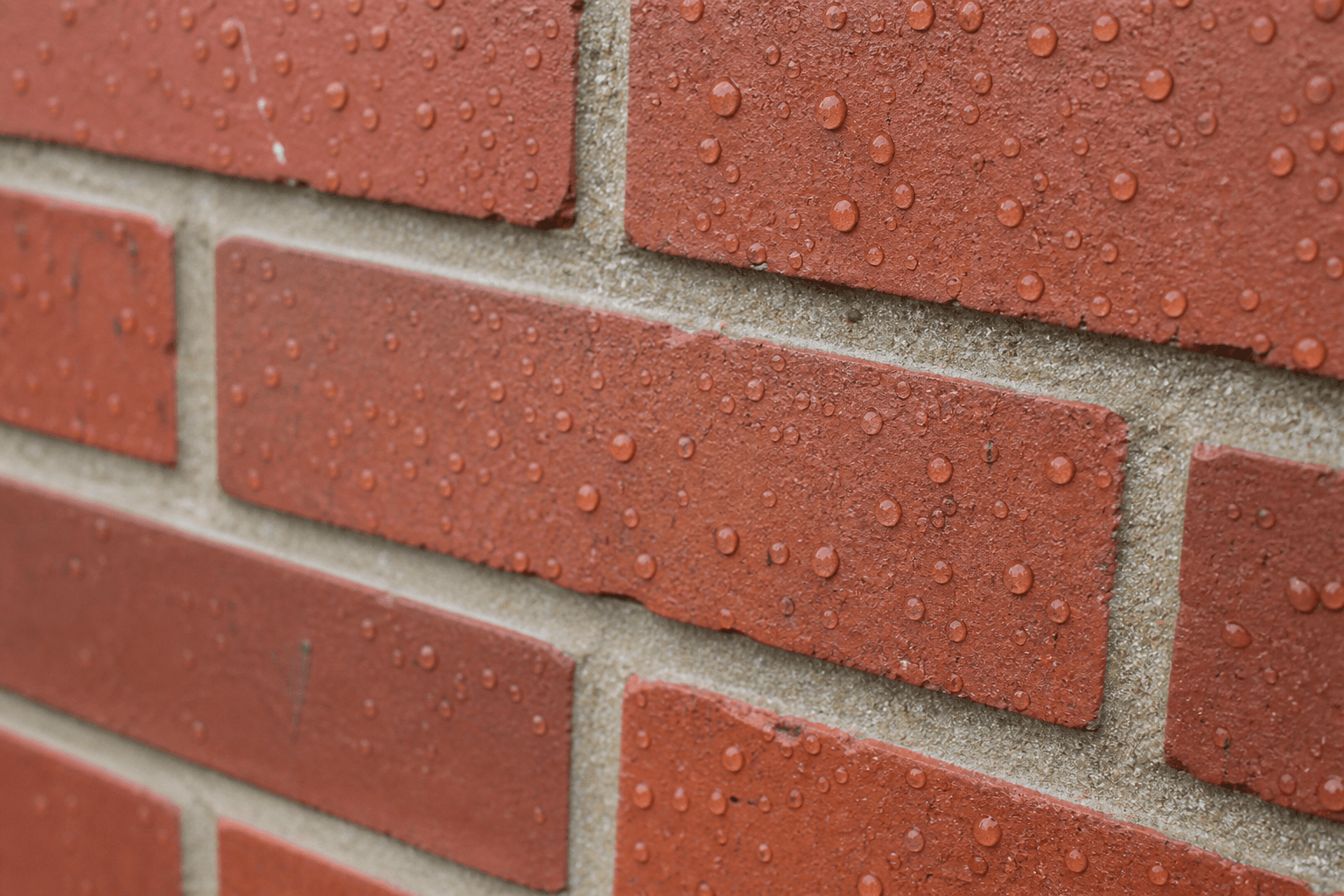
Masonry Waterproofing & Sealing in Toronto

Masonry Waterproofing & Sealing

Penetrating sealers, crystalline waterproofing, and drain tile repair to stop water infiltration in brick walls and foundations.

Learn more →
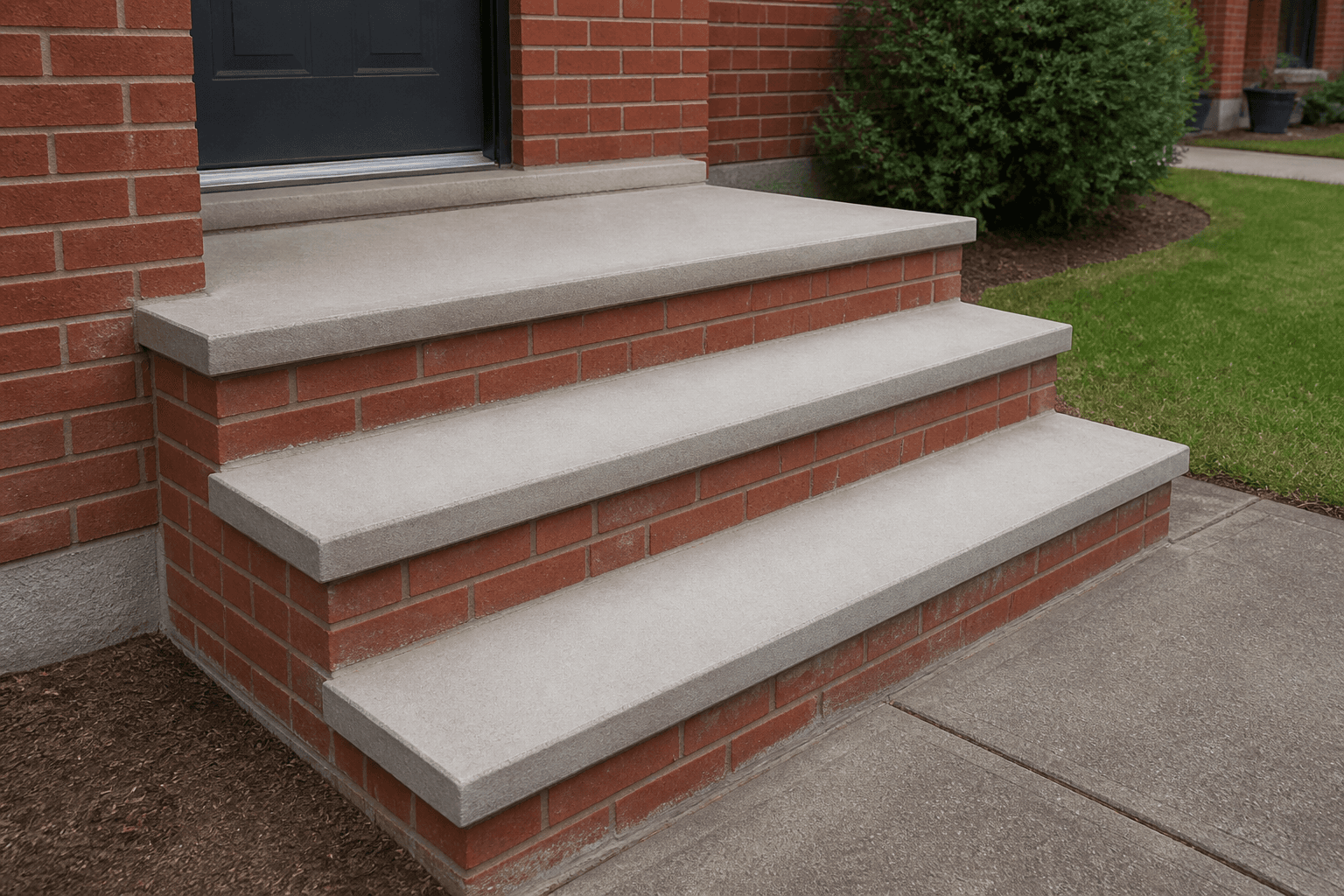
Concrete & Masonry Steps in Toronto

Concrete & Masonry Steps

New poured concrete steps, brick porch stairs, and stone stair construction — safe, durable, and built to last through Toronto winters.

Learn more →
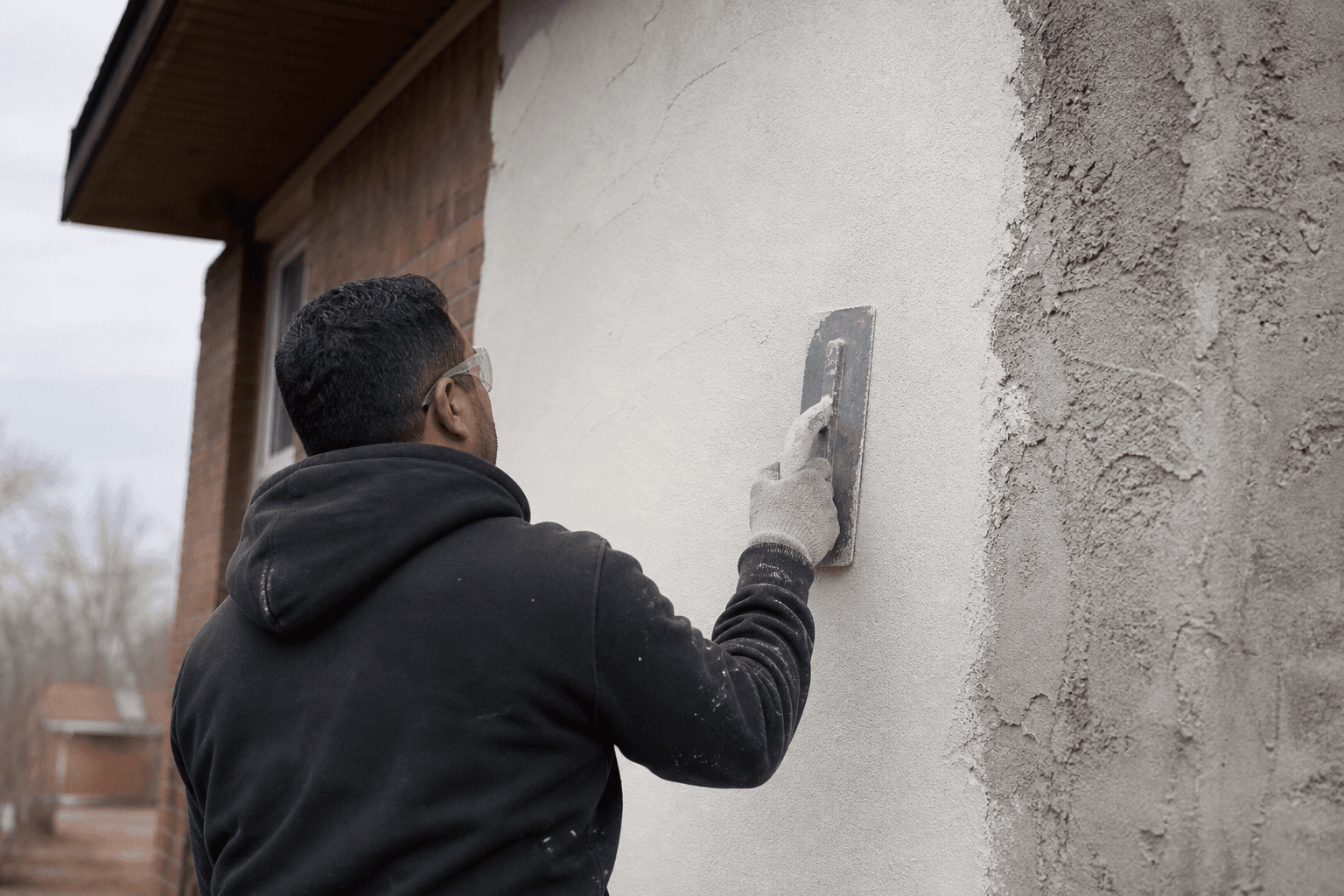
Stucco Repair & Installation in Toronto

Stucco Repair & Installation

Three-coat stucco application, cracked stucco repair, and EIFS remediation on residential and commercial buildings throughout Toronto.

Learn more →
Brick Veneer & Stone Cladding in Toronto

Brick Veneer & Stone Cladding

Full and thin brick veneer, natural stone cladding, and manufactured stone installation to transform any Toronto home exterior or feature wall.

Learn more →
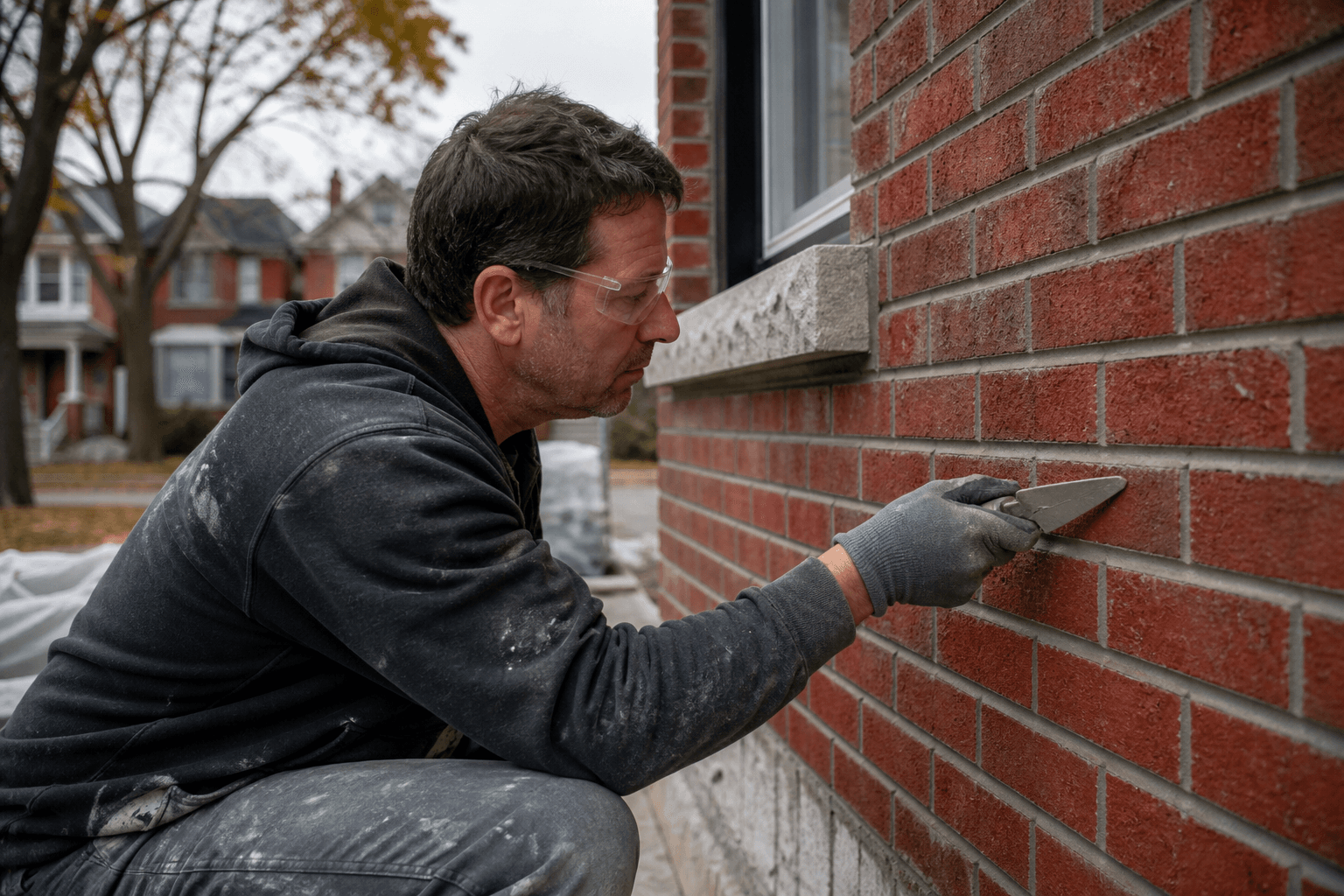
Elite Toronto Masonry crew performing precision brick repointing on a Toronto home

Built to Last Through Toronto Winters

Why Choose Us

Toronto Masonry Done Right — Every Single Time

Elite Toronto Masonry was built around one simple premise: masonry work done properly the first time outlasts masonry done cheaply twice. Our crew doesn't cut corners on mortar mix, joint depth, or material selection — because the consequences show up five winters later when the shortcuts fail.

  • Mortar Mix Expertise

    We match mortar hardness and composition to your existing masonry — especially critical on Toronto's heritage brick, where the wrong mix causes spalling within years.

  • GTA's Freeze-Thaw Knowledge

    Toronto's climate subjects masonry to hundreds of freeze-thaw cycles per year. Our repairs account for thermal expansion, proper drainage, and material flex.

  • Clean, Precise Workmanship

    Joints are cut to depth, blown clean, and packed with properly tooled mortar. We don't smear, we don't rush, and we don't leave a mess on your property.

  • Transparent Quoting

    Every estimate is written, itemized, and explained before a single tool touches your masonry. No surprises, no change-orders for work we should have caught on inspection.

  • Heritage & Modern Properties

    Whether your home was built in 1895 or 1995, we use the right products and techniques — lime-based mortars for heritage brick, Portland mixes for modern construction.

  • Fully Licensed & Insured

    Licensed masonry contractor in Ontario, fully insured, and WSIB-covered on every site. You're protected from start to finish.

Our Process

How We Approach Every Masonry Job in Toronto

Every masonry repair starts with a proper diagnosis and ends with work that integrates seamlessly with your building's existing materials. Here's what the process looks like on a standard repointing project.

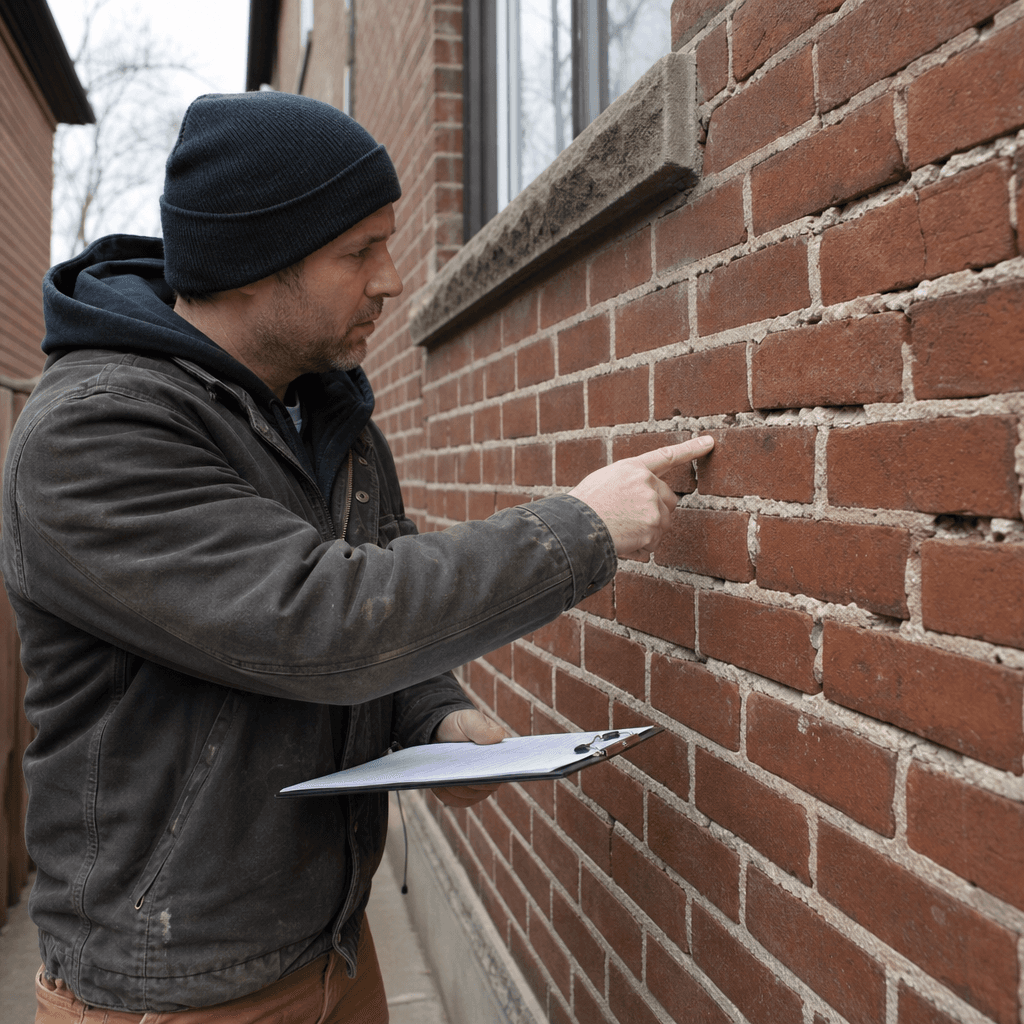
Masonry contractor inspecting brick mortar joints on a Toronto home
01

Site Assessment & Mortar Analysis

We begin with a hands-on inspection, probing mortar joints with a pointing chisel to assess erosion depth, checking for freeze-thaw spalling, efflorescence, and any structural movement. On heritage buildings, we determine mortar composition — whether Portland, natural hydraulic lime, or a lime-putty blend — so the replacement mix matches the original's vapour permeability and compressive strength.

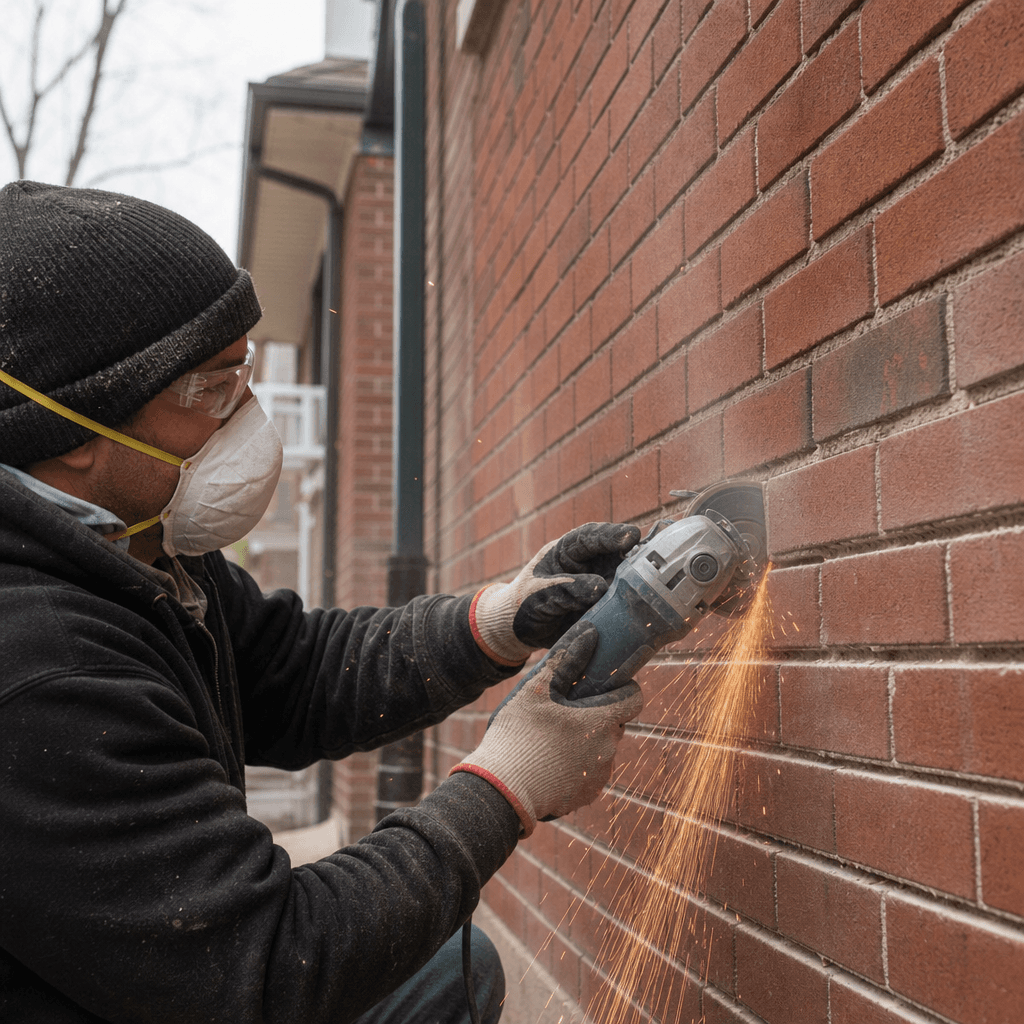
Masonry crew cutting out old mortar joints before repointing
02

Joint Preparation & Saw Cutting

Deteriorated mortar is removed to a minimum depth of 20–25 mm using angle grinders with diamond blades or oscillating tools for tight joints, followed by compressed-air blowout to remove all dust and loose particles. Proper joint depth is non-negotiable — shallow raking, a common shortcut, means the new mortar bond fails within a few years as Toronto's temperature swings load and unload the wall.

Skilled mason applying fresh mortar during tuckpointing in Toronto
03

Mortar Mixing & Application

We batch mortar to match the existing joints in colour, aggregate texture, and compressive strength. Soft heritage brick requires a lime-rich mix (Type N or lime putty) that yields at the joint, not at the brick face. Modern construction typically calls for Type S. Mortar is packed in layers, compressed firmly to eliminate voids, and tooled to a weathered flush, raked, or rodded profile depending on the original joint style.

Service Area

Masonry Contractor Serving Toronto & the GTA

Elite Toronto Masonry serves the full Greater Toronto Area, from the city's downtown core through to Mississauga, Brampton, and Vaughan. Whether you're in the city or in one of the surrounding municipalities, our crews can be on-site for a free estimate.

Also Serving

MarkhamRichmond HillOakvilleBurlingtonAjaxPickeringWhitbyOshawaHamilton
View All Areas We Serve →

Types of Projects

Masonry Projects We Do in Toronto & the GTA

From single-brick replacements on century-old rowhouses to full retaining wall builds and stone veneer installations, Toronto masonry work covers a wide range of scopes and skill sets. Here's how we break down the most common project types — what they involve, when they're needed, and what actually makes them last.

Heritage & Pre-War Homes

Heritage Brick Restoration & Repointing

Toronto has one of the largest concentrations of pre-war brick housing in North America. Homes built between 1880 and 1945 in Roncesvalles, Leslieville, the Annex, and East York were constructed with soft hand-pressed clay brick and natural lime mortars — materials that behave fundamentally differently from modern construction. The wrong mortar on this brick causes face spalling within a few winters, not eventual weathering.

  • Mortar hardness assessment before any joint is cut
  • Lime-based and natural hydraulic lime mortars stocked
  • Colour-matched jointing to original joint profiles
  • Full-elevation or spot repointing scopes available
Brick Repointing
Structural & Cosmetic

Brick Repair, Crack Repair & Lintel Work

Spalled brick faces, stair-step cracks, and the distinctive horizontal cracking above windows and doors are the three most common structural masonry complaints on Toronto residential properties. Stair-step cracking usually indicates differential settlement or lintel failure. The steel angle lintels on most Toronto homes from the 1950s onward are now corroding — expanding as they rust and cracking the surrounding brickwork in a pattern that gets significantly worse each winter.

  • Root-cause diagnosis before any cosmetic repair
  • Individual brick replacement with matched salvage brick
  • Lintel repair, coating, or full replacement
  • Crack stitching with stainless helical bars where structural
Brick Repair
Water Entry & Fire Safety

Chimney Repair, Crown Work & Rebuilding

Chimneys are the most exposure-intensive masonry assembly on any building — all four faces open to the elements, cycling between hot flue-gas temperatures and hard Ontario frost. A cracked chimney crown is enough to funnel gallons of water per storm directly into the chimney structure and the adjacent attic framing. Most Toronto chimneys over thirty years old have crown failures or failed step flashing that homeowners can't see from the ground.

  • Roof-access inspection as standard — all four faces assessed
  • Crown replacement, flashing repair or full replacement
  • Full chimney demolition and rebuild above the roofline
  • Brick and mortar matching on all partial and full rebuilds
Chimney Repair
Moisture Control & Foundation

Parging, Foundation Repair & Waterproofing

A significant percentage of Toronto basement moisture problems originate not from below-grade hydrostatic pressure but from above-grade moisture entry through cracked and eroded foundation walls. Parging — the protective mortar coat on exposed foundation masonry — cracks from thermal movement and age, creating pathways for water to enter the wall assembly long before it shows up as a wet basement floor. Restoring the parging coat can be part of a multi-measure moisture management approach.

  • Two-coat parging system for durability — not a skim coat
  • Crystalline waterproofing on concrete block foundations
  • Penetrating silane-siloxane sealers on above-grade brick
  • Drain tile inspection and remediation where required
Parging & Waterproofing
New Installation & Facades

Stone Masonry, Veneer & New Construction

Natural stone installation for steps, facade veneers, garden walls, retaining features, and architectural elements. Brick veneer and stone cladding on existing structures to transform plain concrete, block, or stucco surfaces. New brick construction for additions, extensions, outbuildings, and boundary walls built to Ontario Building Code. Stone selection matters enormously in Toronto's climate — dense, low-porosity stone performs through freeze-thaw; softer porous varieties deteriorate rapidly on horizontal exposures.

  • Limestone, granite, fieldstone, quartzite, and manufactured stone
  • Full and thin brick veneer on existing substrates
  • New brick construction to CSA A179 mortar standards
  • Dry-lay stone layout before any permanent setting
Stone Masonry & Veneer
Curb Appeal & Outdoor Living

Interlocking Stone, Patios, Steps & Retaining Walls

The outdoor masonry work that defines a property's first impression. Interlocking concrete and natural stone pavers for driveways, patios, walkways, and pool decks. Brick, stone, and poured concrete steps for front porches and side entries. Engineered masonry retaining walls in concrete block, natural stone, or brick to hold grade, control erosion, and create level usable space on sloped lots. The paver or stone itself rarely fails — it's the base preparation and drainage that determines whether the work lasts five years or twenty-five.

  • 300 mm+ compacted granular base on driveways — no shortcuts
  • Polymeric jointing sand as standard on all interlock
  • Retaining walls built with proper drainage and frost-depth footings
  • Brick, stone, poured concrete, and precast step options
Interlocking & Outdoor Masonry

Materials & Selection

Masonry Materials: Brick, Stone, Mortar & Pavers — What Goes Into Every Toronto Job

Material selection is where masonry jobs succeed or fail before a single tool is picked up. The wrong brick grade on an exposed Toronto installation, the wrong mortar on a pre-war heritage facade, or the wrong base depth under an interlocking driveway — each choice drives the outcome years and decades down the road. Here's what we consider, and why it matters.

Brick

The dominant masonry material in Toronto

Standard modular clay brick is the most widely used masonry material in the GTA and forms the exterior cladding on the vast majority of Toronto's residential housing stock. Two broad categories matter on repair work: pre-1940 soft-fired clay brick, which is porous and relatively low compressive strength, and modern extruded or wire-cut brick, which is denser, harder, and less absorbent. The distinction is critical because mortar hardness must always be matched to the brick — a mortar harder than the brick forces all thermal and freeze-thaw movement to occur at the brick face rather than in the sacrificial joint, causing face spalling within years.

Key Considerations

  • Mortar hardness must be softer than the brick to protect the face
  • Pre-war brick (pre-1940) needs lime-based or Type N mortar
  • Modern extruded brick uses Type S or Type N depending on exposure
  • Replacement brick must match the original in size, colour, and absorption rate
  • Grade SW (severe weathering) brick is required for fully exposed Toronto applications

Natural Stone

High-performance when the right species is chosen

Natural stone spans an enormous range of performance characteristics depending on species, quarry, and how it's been finished. In Toronto's freeze-thaw climate, dense, low-porosity stone performs reliably; soft, porous varieties deteriorate quickly on exposed horizontal surfaces. Ontario limestone is the most commonly specified stone for Toronto masonry work — it's locally available, cuts cleanly, and weathers well. Granite is the most durable option for high-exposure horizontal applications like steps and coping. Fieldstone and river rock read as natural and rustic and work well in garden walls and landscape features. Sandstone varies widely — some species are highly frost-resistant, others are not, and the difference is not always visible.

Key Considerations

  • Granite for steps, coping, and high-traffic horizontal surfaces
  • Ontario limestone for facades, walls, and sheltered features
  • Avoid soft or porous sandstone on fully exposed horizontal exposures
  • Fieldstone requires lime-based mortar to allow vapour movement through the wall
  • Manufactured stone veneer replicates the look at lower cost and weight

Concrete Block (CMU)

The workhorse of foundations and retaining structures

Concrete masonry units are the standard substrate for Toronto residential foundations, retaining walls, and commercial structures. They're strong in compression, fast to lay, and take parging coats and waterproof membranes well. In residential masonry, concrete block is primarily the material being protected — through parging, waterproofing, and repair — rather than the material being installed new. When CMU appears in retaining walls, it's typically combined with geogrid reinforcement for walls over 900 mm, with perforated drain tile in a gravel envelope at the footing to manage hydrostatic pressure.

Key Considerations

  • Requires parging or a waterproof membrane for above-grade moisture protection
  • Crystalline waterproofing products bond directly to CMU for below-grade applications
  • Retaining wall block systems (Allan Block, EP Henry) have engineered batter requirements
  • Geogrid reinforcement required on retaining walls over 900 mm exposed height
  • Weep holes at 1.8–2.4 m intervals are essential on all retained CMU walls

Mortar

The most consequential — and most misunderstood — masonry material

Mortar is the least visible material in any masonry assembly, but it drives more masonry failures than any other factor. The wrong mortar choice on a repair job can cause more damage than leaving the deteriorated joints alone. The core principle: mortar in a joint must always be softer in compressive strength than the masonry unit it bonds. This allows the joint — which is designed to be the sacrificial element — to absorb and accommodate thermal movement and freeze-thaw stress without transferring that stress to the brick or stone face. On Toronto's pre-war residential masonry, this means lime-based mortars (Type N or putty lime) rather than modern Portland-heavy mixes. Colour, aggregate texture, and joint profile are secondary to getting the hardness match right.

Key Considerations

  • Type S mortar: strong, for below-grade, retaining structures, modern brick
  • Type N mortar: medium strength, general purpose, sheltered modern masonry
  • Lime-putty or NHL mortar: required for pre-1940 soft brick and fieldstone
  • Wrong mortar on soft brick causes face spalling — visible within 2–3 winters
  • Colour pigments and aggregate texture must match for visible repair work

Interlocking Pavers

Where base preparation determines everything

Interlocking concrete pavers and natural flagstone are engineered for Toronto's freeze-thaw climate better than poured concrete — they flex with the frost cycle rather than cracking across large spans. The paver itself almost never fails. Premature settling, heaving, and surface irregularity trace back almost universally to inadequate base preparation: insufficient base depth, under-compacted granular, incorrect drainage slope, or the absence of proper edge restraints. Residential driveways require a minimum 300 mm compacted Granular A base. Patios and walkways need 150–200 mm. Anything less in Toronto's frost zone will heave and settle.

Key Considerations

  • Driveway base minimum 300 mm compacted Granular A — 400 mm for heavy vehicles
  • Patio and walkway base minimum 150–200 mm depending on subgrade conditions
  • Bedding sand screeded to a minimum 2% drainage slope away from structures
  • Polymeric jointing sand prevents weed germination and resists ant erosion
  • Aluminium or PVC edge restraints spiked to the base on all free edges

Our Selection Process

How We Choose the Right Material for Every Toronto Project

01

Assess the Existing Masonry

Before recommending any material, we identify what's already there — brick species, approximate age, mortar composition and hardness, and whether the building has heritage designation or protected character. Getting this baseline right determines every downstream decision.

02

Match the Exposure Conditions

A material that performs fine on a sheltered interior feature wall can fail rapidly on a fully exposed chimney stack or horizontal step tread. We specify materials based on freeze-thaw exposure rating, drainage conditions, and load requirements — not just aesthetics.

03

Source for Visual and Physical Match

On repair work, the new material must integrate with the existing — in colour, texture, size, and performance characteristics. We source replacement brick from salvage yards and specialty suppliers to match the original. On mortar work, we batch to match the existing joint colour and texture so the repair doesn't read as a patch.

04

Specify Mortar Last

Mortar is spec'd after the masonry unit is confirmed — not before. The mortar mix is the dependent variable. Once we know the brick or stone species, age, and exposure, the correct mortar hardness follows from that. This is the step most contractors skip, and it's the most common cause of premature masonry repair failure.

FAQ

Masonry Toronto FAQs — Brick, Stone & Repair Questions Answered

What are the three types of masonry?

The three main types of masonry are brick masonry, stone masonry, and concrete block masonry. Brick masonry uses fired clay bricks bonded with mortar and is the most common construction method found on Toronto homes and commercial buildings — known for its durability and classic appearance. Stone masonry uses natural quarried stone such as limestone, granite, or fieldstone, and is prized for its strength and curb appeal on facades, steps, and retaining walls. Concrete block masonry (also called CMU or cinder block) uses precast concrete units and is widely used in foundations, commercial structures, and retaining walls for its strength and cost efficiency. At Elite Toronto Masonry, we work across all three types — from repointing heritage brick to cutting natural stone and parging concrete block foundations.

What are the best stones for masonry?

The best stone for a masonry project depends on the application, budget, and the look you're after. Limestone is the most commonly used natural stone for Toronto masonry — it's durable, easy to cut, and weathers beautifully in Ontario's climate. Granite is the hardest and most weather-resistant option, ideal for steps, retaining walls, and high-traffic surfaces where you need maximum strength. Fieldstone and river rock give a natural, rustic character to garden walls and landscape features. Bluestone and sandstone are popular for patios and walkways because of their flat surfaces and attractive texture. For budget-conscious projects, manufactured stone veneer replicates the look of natural stone at a lower cost and is faster to install. Our stone masons can help you choose the right material based on your project type, the surrounding architecture, and how the masonry will need to perform through Toronto's freeze-thaw winters.

Which is cheaper, stone or brick?

Brick is generally cheaper than natural stone — both for the material itself and the labour to install it. In the Toronto market, brick masonry typically runs less per square foot than natural stone work because brick is a uniform, manufactured product that's faster to lay and easier to source locally. Natural stone requires more skilled cutting and fitting, varies in size and shape, and costs more to quarry and transport. That said, the gap narrows depending on the type of stone — manufactured stone veneer can be priced similarly to brick, while premium natural limestone or granite will cost considerably more. Both are long-lasting investments that add real value to a Toronto property. If budget is a primary concern, brick is usually the more economical starting point, and we're happy to walk you through the options and cost differences for your specific project.

What is brick repointing and when do I need it?

Brick repointing — also called tuckpointing — is the process of removing deteriorated mortar from between bricks and replacing it with fresh, properly mixed mortar. You need repointing when you notice crumbling, cracked, or recessed mortar joints, water infiltration through your walls, or efflorescence (white salt staining) on the brick face. Toronto's freeze-thaw cycles accelerate mortar deterioration, so most brick buildings need repointing every 20 to 30 years.

How do I know if my masonry needs repair?

Common warning signs include cracked or crumbling mortar joints, spalling (flaking) bricks, damp interior walls after rain, efflorescence on the exterior, bowed or bulging brickwork, and gaps around windows or doors. If you notice any of these on your Toronto home or building, contact a licensed masonry contractor for an inspection before minor issues become major structural problems.

How long does a masonry repair project take?

The timeline depends on the scope of work. Spot repointing a small section may take a single day, while a full chimney rebuild or extensive brick restoration on a multi-storey building can take one to two weeks. During your consultation, we provide a detailed project timeline based on the specific conditions of your masonry.

What is parging and does my foundation need it?

Parging is a thin coat of mortar applied to the exterior face of a foundation wall, concrete block, or rubble stone foundation. It seals the surface against moisture penetration and protects against Toronto's harsh winters. If your foundation shows cracks, exposed aggregate, or is letting in water, parging is one of the most cost-effective protective measures available.

Can you match existing mortar colour when repointing?

Yes. Colour-matching existing mortar is a standard part of every repointing job we do. We assess the existing mortar's colour, aggregate, and texture and mix or select a mortar that blends seamlessly with the surrounding joints. On older Toronto homes with heritage brick, we take special care to match not just the colour but the mortar composition to avoid accelerating damage to the brick faces.

Do you work on heritage and older Toronto homes?

Absolutely. Many of Toronto's brick homes were built in the late 1800s and early 1900s using soft heritage brick that requires softer, lime-based mortars. Using the wrong mortar type on heritage brick causes the brick faces to spall and crack. Our masons understand heritage masonry and use materials appropriate to the age and composition of your building.

What areas do you serve besides Toronto?

We serve the entire Greater Toronto Area, including Mississauga, Brampton, Vaughan, Markham, Richmond Hill, Oakville, Burlington, Ajax, Pickering, Whitby, Oshawa, and Hamilton. If you're unsure whether we cover your area, call us and we'll confirm.

Free Estimates — No Obligation

Get a Free Masonry Estimate in Toronto

Call or send a message and we'll arrange a free on-site assessment. We serve Toronto and all of the GTA.

Serving Toronto · Mississauga · Brampton · Vaughan · Markham · and all of the GTA